Circumstances of fraudulent behaviour - using past cases to detect fraud today

by Bo van Elzakker
The article in TOS 205 Analysis of a likely fraud: a Grain case in Eastern Europe was about one specific case of wheat grown in Slovakia ending up in a German bakery. There are other cases, with grains, for food and feed (meaning wheat and other cereals via soya to oilseed cakes) coming from as far away as Kazakhstan and Russia, or from Ukraine and Moldova, but also from EU member states like Slovakia, Bulgaria, and Serbia, usually using the Black Sea to ship it from to Europe and North America. However, the Organisers, as we call them, were not only from Türkiye but also Germany, Italy, and the Netherlands. More CBs were involved. The first point of entry into markets ports could have been also in Italy or Spain but also Canada and the US, or the UK.
This second article describes some characteristics of the problematic cases in more detail. More wheat but also maize and sunflower are considered. The expectation is that East European supply chains have improved a lot since, for example in Ukraine where buyers, producers, consultants, CBs, authorities build a stronger system together. The question is, do end users, importers, CBs, or authorities see some of these constructions, circumstances, symptoms still today? In Eastern Europe and in other origins? In new supply chains? It is advised to read this article as a follow up to the one in TOS 205. Comments are appreciated as the Organic Observatory intends to publish more articles about grains in the near future and we can take your input along.
Our emphasis remains on learning, using these experiences to alert the organic control community to such circumstances. We hope readers will ask themselves questions such as:
· Can this still be occurring?
· Are we alert to such circumstances?
· What can we do when we suspect or when we detect some of these situations?
· Do recent changes in regulations help to detect and address these opportunities for fraud?
· What more needs to be done and what can I do?
Ownership
The organic history of this region starts from the collapse of the formerly collective or state farms after the end of the central planning economy. The farms are privatised, and have to buy their inputs, look for markets, and act as companies. As there is little money in the system, a situation arises that a lot of land lays fallow, and few inputs are used. Prices are low. Some traders pick this up as “organic by default” and start exports of cheap products to the growing Western organic markets. By 2010 the region has become a major origin for large volumes of cheap food and feed grains.
There are different variations in how the supply chains are organised, managed. In the best cases the farms (1,000-2,000 hectares) have a competent Farm Manager who is pre-financed by a Western importer, to grow certain crops, to secure a steady supply. When the relationship is good, and stable, the trader invests in for example new storage facilities or farm equipment, so has a presence. They regularly speak with each other, it is a clear supply chain, there is an interest in good organic practices. There are also Supply Organisers, employing Local Organisers in the different countries, who rent plots on a series of farms, some of the facilities, use some local farm workers, come with their own inputs (seed, fertilisers) sometimes own equipment, and organise different certifications from an office in the (district) capital. They supply to various importers on different continents. They do not share much information. That is quite a different organisation, delegation of responsibilities. It is about having a certificate, about being residue free, the Organiser making money. It is mainly in these longer, often not so clear supply chains that problems arose with organic integrity 10-15 years ago. These longer supply chains with many more stakeholders in different countries may still exist. They may have professionalised. Still recommend that buyers of East European food and feed grains, CBs that certify bits and pieces in the long supply chains know the ownership construction, where the responsibilities lie, where the product originates from, the situation on those farms.
These Supply Organisers do not always rent whole farms, all plots, all facilities. The organic plots are incorporated in an organic farm company. Other plots where the same product may be grown are part of other entities, so there is no parallel farming, no responsibility for drift. Below is a picture of an extreme example of how such an organic farm can look. Scattered fields of that shape, result in many buffer zones. In that case, blaming pesticide drift is an easy excuse when finding residues. And, how to do proper inspection, sampling on such organic farms?
The CB/inspector should not only have a map, but they should also check that the locations, plot sizes and field histories are correct. Remember, the farm documentation is generated off-farm. And one should know what is grown on neighbouring plots. In the above example that is a lot of work to get that right, a lot of driving, talking to different persons, to verify that the information is correct. Too much for a one-day visit.
Facilities and equipment can be shared among the different operators, usually conventional, using this farm. Equipment is parked/maintained on the same yard. This explains why the sowing machines are ‘always’ coloured red inside because of the seed treatment of conventional seed – not of the organic seed of course. It also allows for the presence of spraying machines, not used for the organic plots of course. At that time, farm mechanisation was still poor. In some cases, the Supply Organiser not only provided the inputs but also some equipment, with separate subcontractors doing the ploughing, sowing, fertilisation, treatments, harvesting. They come with flatbeds with equipment, own fuel, own drivers, work 24/7 if possible, and leave. One cannot expect the farm manager to have genuine oversight for those farm activities.
Storage is always short of capacity. For the farm manager it is often a puzzle where to store which product, from which users, from which field, to keep organic separate, even temporarily. On some farms, when all fields are grown with grains, the volume harvested was far over storage capacity. Like in the Slovak case, a farm manager’s reality that all silos are stored to the brim with wheat from different fields is more reliable than the promise of an off-farm Certification Manager that the wheat from different organic fields is stored separately.
Farms in a direct supply chain are pre-financed by an importer/trader so there is an indication of the market, like Germany, Switzerland, etc. In the indirect supply chains nobody has an idea for which market the product is grown. There is no need for them to know, the Organiser wants them to stay loyal to, read dependent on him. Sometimes the Local Organizer does not know either, even when a certain batch is shipped to an elevator in a port. He is not the owner either.
In supply chains with integrity problems, commercial contracts were often made long after harvest. There is more speculation. It may be wise to wait after harvest because yields may be low due to disease and weeds infestation and the quality may be low, so product may have to come from somewhere else. Sometimes markets, and prices, are brilliant and farms are asked whether they have not harvested some more. A correction of acreage helps. It is very convenient that different farms produce the same commodity so they can help each other getting the quantities and qualities right. Some Organisers are sourcing the same commodity in different countries and then it is handy that all product passes through the same processing plants before export. Integrity problems were more common in late deliveries, when there were shortages in the markets.
The above observations were made in “not the best” situations. Some of these supply chains were disrupted, others not, some surfaced later under another name, with the same or a different Organiser. One can expect that the same questions are still valid i.e. who organizes, where does the money come from, who holds the certificate, who owns the product, who sells? Do today’s inspectors, inspection planners, certification decision makers, Certificate of Inspection or Transaction Certificate printers, do sellers and buyers have an overview, know the answers?
Farm practices
Usually there is a simple, standard Organic System Plan (OSP) in English. The same for many farms. That is because farm documentation, in English, is done by the Certification Manager. When visiting, the farm managers and agronomists never had an OSP, not in English, not in the local language. Nor could they explain farm practices. They do not speak English or German. They were very good in stating that there are no problems. There is no budget, no planning, no storage for inputs and no recordkeeping on the farms. The Certification Manager is referred to, for any information.
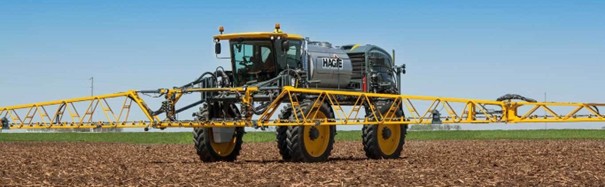
On one farm, the due diligence auditor saw three 15m wide tine harrows in the back of the farmyard. The farm manager said they were parked there since a Non-Compliance was raised some years ago. They had not been used because they did not have the right tractors/tires to pull them. And they did not match the width of the sowing machines. And by the way, they did not have a weed problem in the past years. On another farm, on an open day for an international delegation, a tine harrow was shown to explain how weeds are controlled in organic. The impolite question how they could weed 800 hectares in a 1–2-week (dry) time window was not answered. On another farm we found a high clearance spraying rig. These can be used in late applications in wheat, maize and sunflower. We could not go near, there was no discussion, it was not used for organic.
One regularly wondered whether the farm manager and the agronomist knew that they were organic farmers. Even when they knew, they do not know what organic farming is, or what the approved organic inputs are, or where to get them, they do not now any other organic farm, they were not aware of the local organic movement, they did not go to organic conferences or workshops. Do they really have no problems with weeds, pest and diseases, soil fertility, do they really not do anything, know nothing? The instruction certainly appears to “do nothing”. Or, organic is defined by “no residues”. In one case they confessed that one batch of wheat had to be dried, cleaned thrice because of the high weed infestation. They were surprised that the visitor saw this as proof of ‘organic management’.
The Certification Manager is always present. He guides the inspector, provides for translation. According to him, there is no need to talk to the farm manager, the agronomist, tractor drivers, the bookkeeper, even the storekeeper, they are pictures as quasi-illiterate, saying the wrong things. All info is right there with the Certification Manager, who comes in from the district capital. He produces any document required. And when the document is missing, or not correct, a correct document will be supplied within a few days, after the visit. He provides you the information for your report.
When for one or the other reason the Certification Manager is not present, then the farm manager, the agronomist, bookkeepers, storekeepers are too busy, sick or have travelled. Or are newly appointed, so that they do not know the history. When you say that according to your information you should look at fields 3, 12 and 39, then most are too far away, the road is not good, the car that can handle the road has just broken down, there is not enough time, etc. Or they do not know where field 39 is, as they do not have that map. It is better to go for a ‘light’ lunch (with some drinks) and relax about field visits. All fields are the same anyway!
Field visits are important though because farm maps, field locations, numbers, plot sizes can be very changeable. It is a recurrent experience that when the yield is deemed too high for the acreage, the acreage is changed. When there are questions about a healthy rotation, they first need to understand why that is of importance and then they offer to change field histories retrospectively. The Certification Manager is happy to do all that, he wants to provide the inspector with the right information for the inspection report. Even when it is contradictory with the information of last year. They know that report reviewers, decision makers, oversight bodies look at the information of the certified commodity for the crop year only.
One should wonder about buffer zones making sense. When asking about separate harvesting, storage and marketing of buffer zone product, you can get the question in return why on earth that is important to know, the question is not answered. Drift is such an easy excuse.

The source of the organic seed is often a mystery. Claims of farms growing their own organic seed are difficult to check as those seeds are not stored somewhere separate. They may have it from another farm but there is no invoice. A problem is, even when self-generated, it is mandatory to treat seed. That explains why the inside of the sowing machines is almost always red. Of course, the same sowing machine may also be used for sowing conventional seed. They cannot help that.
There are often quite fertile soils, but some fertilization is still required. There are often few legumes to be seen in the field, even when field histories indicate more frequent use. Organic fertilizers like commercial composts are not, or hardly available, and too expensive. Most of the erstwhile collective farms still have an animal production unit, which is mentioned as the source of enough manure for the whole acreage. The organic farms do not grow fodder crops though; you cannot export that. They do not supply straw as bedding either, transport costs are too high. The manure heaps often look untouched for many years, effluent is leaking. Nobody knows about composting or what a nutrient balance is. Despite the absence of organic fertilisation practices and the prevalence of weeds (even when denied), yields per hectare are relatively very high, sometimes 120% of conventional.
Be careful with insisting on too many field visits though. Before you know you return late and there is no time to do serious for example mass-balancing. To find out that some or most relevant information is not on the farm, that it is in the Certification Manager’s office in town. The required information can be sent next week though. Just tell him what you need.
More about trading practices
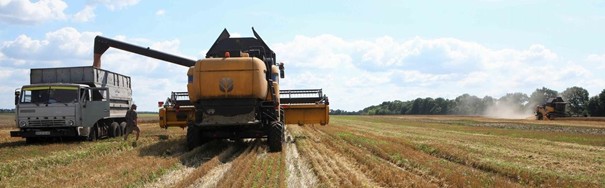
The harvest period begins in August and ends mid-September. After harvest, the wheat is temporarily dumped on heaps, outside, on platforms. Wheat from other plots too. Combine harvesters, farm transport, storage space is in short supply, so one can only hope that there is separation. There must be quite some improvisation on the farms. The organic wheat is cleaned, dried and stored on the farms. After all is harvested, the Certification Manager passes by to take first samples for residues analyses. Shipment is from November till May.
Inspection, usually one day per farm, is either done before harvest to see the wheat in the field, to take some plant samples. The inspector is guided by the Certification Manager from the Supply Organiser’s office. He has the documentation but not complete because the season has not finished, not all information has been processed. There may still be some unsold old stock somewhere. Or the inspection happens two-three months after the harvest, to see what is there to sell. By that time some has left the farm premises but there is a lot more to sell. It is never the right time to do mass balancing.
This allows for phantom old stocks carried over from past seasons, a nice reserve. Phantom because when you want to see it, it is always just gone.
The farms have little information, memory of the product being grown but they certainly have no knowledge of where the grains went, which market, at what price. Farms are paid a very low price as the Supply Organiser provided many of the inputs. In case sales are slow, farms not informed, when farms are not being paid but are desperate for some cash, they can sell some of the crop, to be balanced out later. Somehow.
Organic integrity is more easily compromised when markets are speculative, volumes vague, prices not yet settled, traders waiting for a shortage and a better price. The date of contract thus says something about how solid the organic guarantee is. Do the CBs, the inspectors ever see the farm’s contracts? Remember the phantom old stocks.
The Organisers may have their own funds but are often financed by commodity speculators. Each one has their own expectations, maybe their own market contacts/interests. The Organiser may be different traders selling the same product into the same or different markets. Some fraud cases happened because a trader did not inform the others that he had sold or was close to selling, maybe the whole quantity. That the others were also selling. When importers hear of a competitive price, they may quickly order similar quantities for the same price. Deals were made while there was limited communication in the supply chain about product still being available. However, once a contract is made, it needs to be delivered. Local Organisers, who also want to benefit from the good market, then scramble for similar product, large quantities, residue free.
It is risky business, for all. That is why some trade companies wind up after one season’s business is concluded. The owners are no longer accountable for the mistakes in the previous year. It also saves paying taxes. New companies are re-incorporated under a little different name, a slightly different address, same or new shareholders-investors.
When the quality is poor, batches can be exchanged. When the market is good, additional volumes are created in different ways. One is that the organic product is stored in multiple storages, one after the other, but each storage exports a lot of that size. That a product is moved through different countries, to different markets helps in further convoluting the situation.
The Slovak wheat in TOS 205 was not trucked from Slovakia to Germany, it was shipped using different means of transport to Türkiye, for quality control, then shipped to a Dutch port, from where it was trucked to Germany. Country of Origin: Türkiye.
In one case, there were different offices, different persons in a CB who could provide Certificates of Inspection. Another trick is that the Certificate of Inspection needs to be corrected, when for example 2 tons were lost during a transshipment. A new Certificate of Inspection (for EU) or Transaction Certification (for US) is then provided.
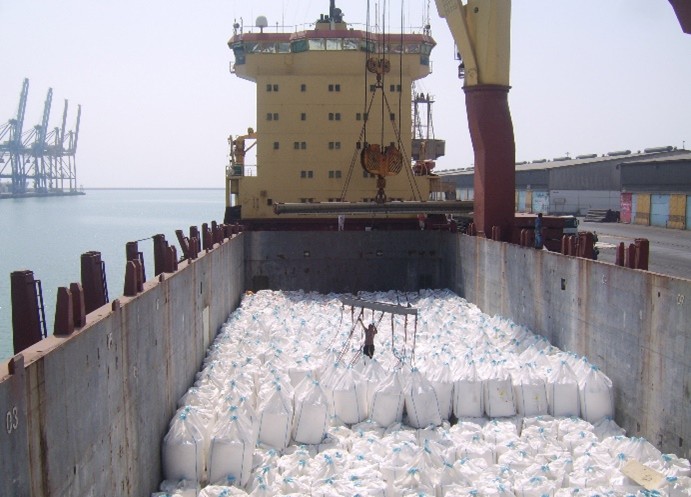
What to say about fumigation? That it is mandatory, that there can be exceptions, that both certificates are provided with the Bill of Lading? Given the shortage of good storages, it is probably a wise thing to do. That fumigation may happen while sailing the Black Sea, with a specialised vessel coming along to pump in the gas? That this may be detected by the coast guard when the ship’s hatches are opened a few days before docking, to vent the holds from the gas?
Is this now in the past?
Of course, this is how it was in the problematic cases that were visited 10-15 years ago. We do not know whether these circumstances are still visible today. The CBs, and the buyers should know.
Supply chain traceability, of large volumes of commodities grown on different farms in different countries, shipped in bulk, centrally processed and then shipped out in different directions, involving different CBs and different import markets is very difficult if not impossible. Are the CBs sufficiently aware that the environment they are certifying may be part of such a puzzle? Do inspectors detect some of the symptoms that are associated with non-compliance, or fraudulent behaviour. Do the users, buyers consider this risk? Does this paper help in making a better risk assessment?
If you would like to give feedback and opinions on this paper, please contact Bo van Elzakker at elzakker@alliancefororganicintegrity.bio