INTRODUCING EMPCO
by Nuria Alonso, Commissioning Editor, TOS
For years, the EU has been developing legislation to protect consumers and at the same time, to improve sustainability and environmental- friendly practices of its production and commercial sectors. The EmpCo Directive (UE) 2024/825 falls within this framework; it is about ‘Empowering Consumers for the Green Transition’ and modifies the Directives 2005/29/CE and 2011/83/UE.
The aim is to set the basis for the achievement of the objectives under the European Green Deal.
This is known as the ‘anti- Greenwashing’ directive, since it intends to protect consumers from the deception of greenwashing whilst also contributing to the environmental targets the EU has set for the medium and long term.
September 27, 2026, is the Application Date: The Directive becomes fully binding and enforceable for businesses across the EU.
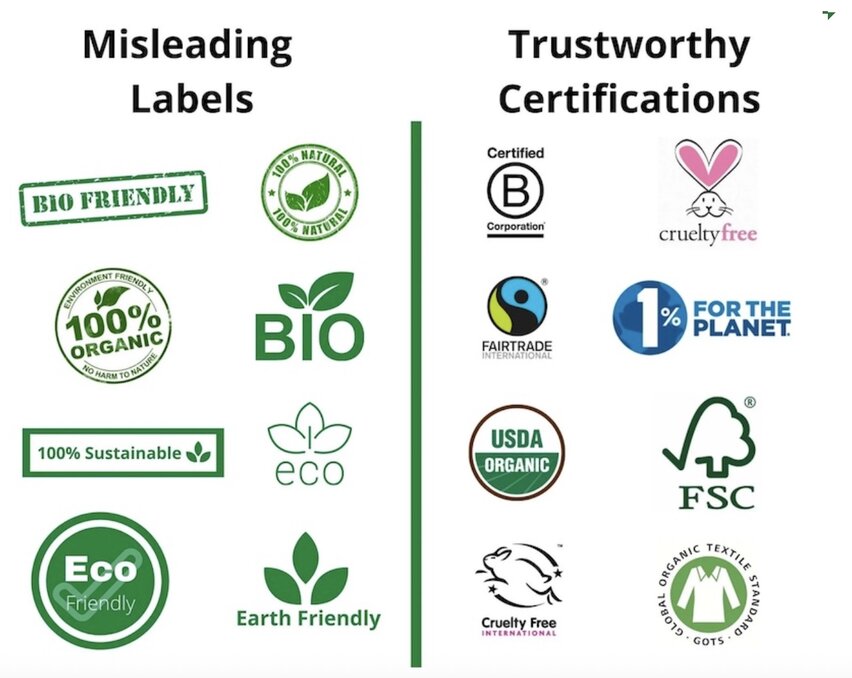
With the new directive generic environmental claims such as: ‘eco-friendly,’ ‘green,’ ‘climate-neutral,’ ‘carbon-neutral’, etc., can no longer be used without recognised substantiation. Unverified sustainability labels are banned outright.
Consumer protection had already been set by the Directive 2005/29/CE. Its Annex I listed 31 ‘commercial practices which are in all circumstances considered unfair’. The new directive amends this Annex I to insert among others, the following statements:
It is considered an unfair commercial practice when:
– ‘Displaying a sustainability label that is not based on a certification scheme or not established by public authorities’
– ‘Making a generic environmental claim for which the trader is not able to demonstrate recognised excellent environmental performance relevant to the claim’
The new Directive also adds some definitions such as:
‘Sustainability label’ means any voluntary trust mark, quality mark or equivalent, either public or private, that aims to set apart and promote a product, a process or a business by reference to its environmental or social characteristics, or both, and excludes any mandatory label required under Union or national law;
“Certification scheme” means a third-party verification scheme that certifies that a product, process or business complies with certain requirements, that allows for the use of a corresponding sustainability label, and the terms of which, including its requirements, are publicly available and meet the following criteria:
(i) the scheme is open under transparent, fair, and non-discriminatory terms to all traders willing and able to comply with the scheme’s requirements;
(ii) the scheme’s requirements are developed by the scheme owner in consultation with relevant experts and stakeholders.
The term ‘organic’ is not specifically mentioned by the Directive, but it is covered by the wide definition of ‘Sustainability label’. Additionally, specific sectors that are concerned by the Directive such as food, cosmetics, textiles, etc are not mentioned, because the directive concerns all kind of sectors and products; except the organic food production already covered by the Regulation EU 848/2018.
Since the scope is so wide, there are still sectors that are not specifically mentioned in the Directive but can be affected; for example: if every sustainability label has to follow a third-party verification, will the PGS systems existing in the EU be able to continue? PGS are not recognised by the Regulation EU 848/2018, so, their products cannot be called ‘organic’, but they are a sustainability label in place for many years now in several EU countries.
Another issue not so clearly defined is if the certification bodies verifying the sustainability labels must be accredited. It is not an explicit mandatory condition, but in principle, it can be assumed that accreditation for the certification scheme is not expressly required, meanwhile for the certification body, although not expressly required either, accreditation is the clearest way to demonstrate competence and independence.
To support the understanding and application of this vast and complex subject, the European Commission published answers to frequently asked questions from stakeholders. The FAQ clarifies that terms such as ‘natural’ or ‘vegan’ can be considered under the scope of this directive if they ‘are used in a brand name or product name in a way that is likely to create an environmental association for the average consumer’
Further information:
NATRUE article on EMPCO implications for claims related to cosmetics